How One Quiet Year 12 Student Found Her Voice Through VETDSS
Sometimes the most powerful educational outcomes start with a timetable conflict.
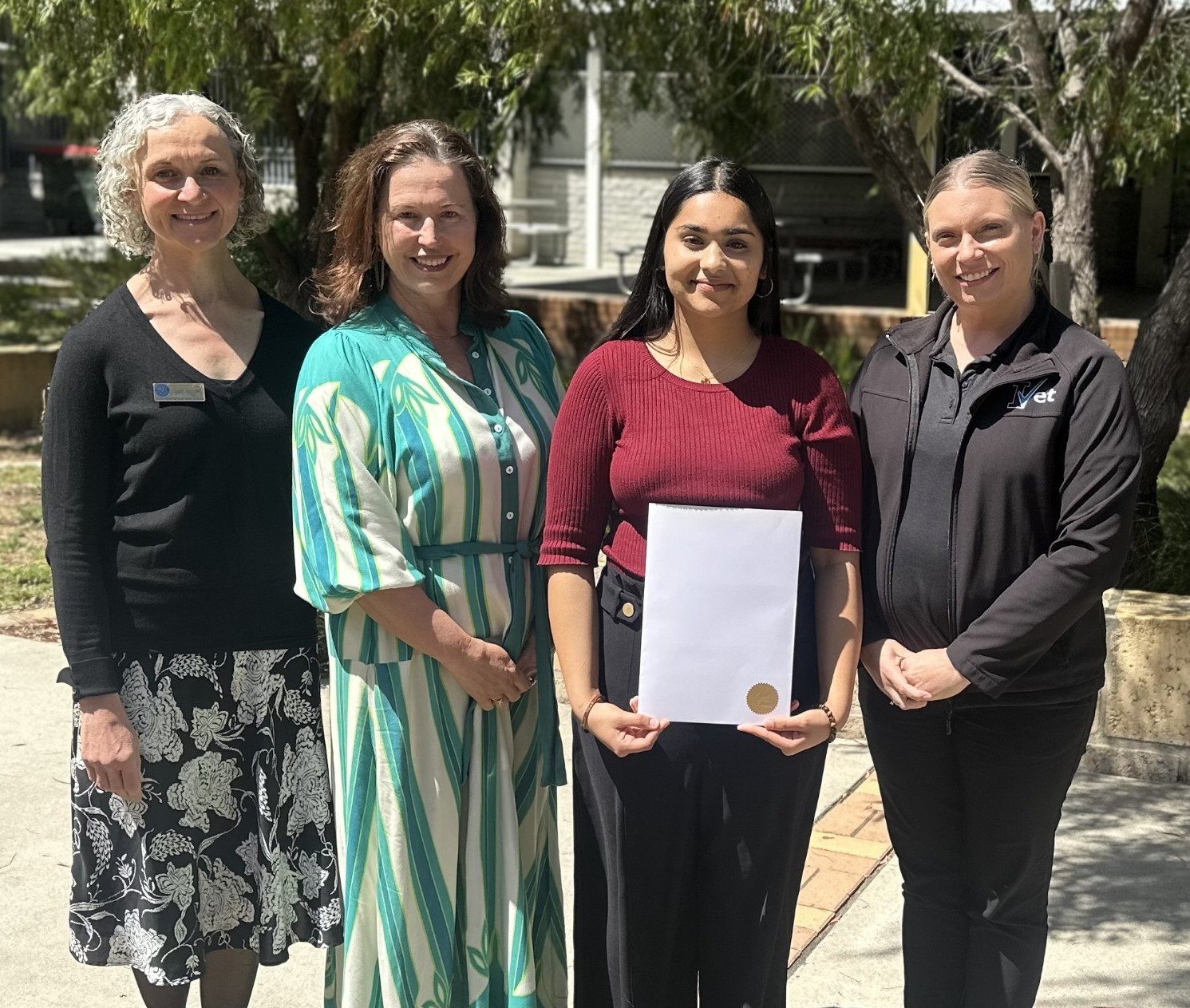
When Jasmine Sinhmar, from Rossmoyne Senior High School in Western Australia, enrolled in Certificate II in Community Services, she wasn’t looking for transformation. She was solving a scheduling problem. Jasmine describes herself at the start of the year as having “limited social skills,” inherently quiet, and afraid of drawing attention.
By year’s end, she’d completed 120 hours of community volunteering at a local childcare centre, developed genuine confidence in professional communication, and earned our 2025 Excellence Award.
That’s what effective VETDSS programs actually do, they don’t just teach curriculum, they fundamentally shift what students believe they’re capable of achieving.
When Learning Feels Different
Here’s what stands out in Jasmine’s reflection: “This quickly became the most valuable and formative class I took.”
Not “most enjoyable.” Not “easiest.” Most valuable.
The units she completed weren’t abstract concepts divorced from application. Working with diverse people. Responding to workplace problems. Workplace Health and Safety. Each connected directly to situations she’d encounter in actual work environments.
This is the fundamental difference between knowing about something and knowing how to do it.
The Power of Safe Practice
Role-play situations created what Jasmine calls “a safe environment to practice clear and confident communication.”
Many students struggle not because they lack capability, but because they lack opportunity to practice professional skills in low-stakes settings. Academic classes rarely provide this. Traditional assessments measure knowledge retention, not interpersonal competence.
By the time VETDSS students enter actual workplaces, the skills feel natural rather than frightening.
Notice what Jasmine says about engagement: “The content was taught in an engaging manner that kept us focused and off distractions like our laptops.”
Peer mentoring Year 7 students. School gardening initiatives. Senior First Aid certification. These weren’t theoretical exercises, they were real contributions with visible impact. Students stayed engaged because the work mattered beyond assessment requirements.
The Ripple Effects
Here’s where the true measure of program success appears in Jasimine’s story: “Leveraging the time management and organisational skills I gained, I successfully dedicated over 120 hours to community volunteering.”
The capabilities she developed in one context transferred seamlessly to another. Time management, organisation and confidence to engage professionally. These competencies enabled achievements far beyond the original course scope.
Jasmine managed significant volunteer commitments alongside a demanding Year 12 workload, something she explicitly attributes to skills learned through VETDSS.
This is what educators mean when they talk about transferable skills. The learning transcends specific content to reshape how students approach challenges generally.
What This Means for Schools
This student’s experience reveals what effective VETDSS implementation delivers:
- Vocational pathways serve all students, not just those disengaged from academics. This student was completing Year 12 successfully. The vocational program enhanced rather than replaced her academic trajectory.
- Practice-based learning develops confidence in ways traditional assessment cannot. Safe practice environments created opportunities for growth without the fear of permanent failure.
- Teacher quality determines outcomes. She credits Ms. Bozich specifically for “engaging activities,” “passion for teaching,” and creating “a uniquely positive and supportive classroom environment.”
- Real-world application motivates intrinsically. When learning connects to genuine contribution, external motivation becomes unnecessary.
Building Programs That Transform
The question for schools isn’t whether to implement VETDSS. It’s how to build programs that deliver these transformative experiences consistently.
Start with passionate, qualified teachers who understand hands-on pedagogy. Design curriculum around authentic practice -role plays, real projects, workplace learning. Foster collaborative environments where students grow together. Connect learning to genuine contribution through service projects and community engagement.
Jasmine concludes: “The valuable skills I acquired here will benefit me far into the future.”
That’s the measure of educational success, not test scores or completion rates, but genuine preparation for what comes next.
When schools implement VETDSS programs that prioritise authentic learning, supportive environments, and passionate teaching, students don’t just earn qualifications. They discover capabilities they didn’t know they possessed. They develop confidence that transforms how they approach challenges. They build networks that support them beyond graduation.
That’s what happens when vocational education works as intended, students who entered quietly leave ready to make their voices heard.
Learn more about IVET’s range of Community Service programs here