
Sometimes the most powerful educational outcomes start with a timetable conflict.
When Jasmine Sinhmar, from Rossmoyne Senior High School in Western Australia, enrolled in Certificate II in Community Services, she wasn’t looking for transformation. She was solving a scheduling problem. Jasmine describes herself at the start of the year as having “limited social skills,” inherently quiet, and afraid of drawing attention.
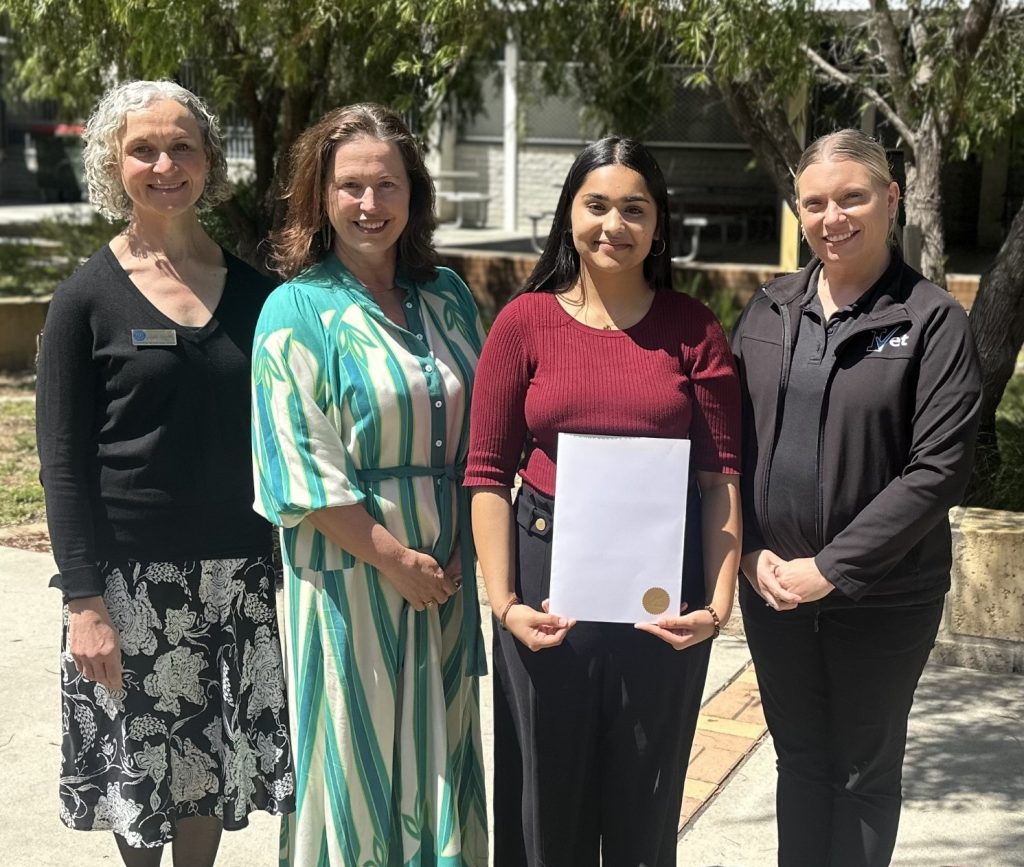
By year’s end, she’d completed 120 hours of community volunteering at a local childcare centre, developed genuine confidence in professional communication, and earned our 2025 Excellence Award.
That’s what effective VETDSS programs actually do, they don’t just teach curriculum, they fundamentally shift what students believe they’re capable of achieving.
When Learning Feels Different
Here’s what stands out in Jasmine’s reflection: “This quickly became the most valuable and formative class I took.”
Not “most enjoyable.” Not “easiest.” Most valuable.
The units she completed weren’t abstract concepts divorced from application. Working with diverse people. Responding to workplace problems. Workplace Health and Safety. Each connected directly to situations she’d encounter in actual work environments.
This is the fundamental difference between knowing about something and knowing how to do it.
The Power of Safe Practice
Role-play situations created what Jasmine calls “a safe environment to practice clear and confident communication.”
Many students struggle not because they lack capability, but because they lack opportunity to practice professional skills in low-stakes settings. Academic classes rarely provide this. Traditional assessments measure knowledge retention, not interpersonal competence.
By the time VETDSS students enter actual workplaces, the skills feel natural rather than frightening.
Notice what Jasmine says about engagement: “The content was taught in an engaging manner that kept us focused and off distractions like our laptops.”
Peer mentoring Year 7 students. School gardening initiatives. Senior First Aid certification. These weren’t theoretical exercises, they were real contributions with visible impact. Students stayed engaged because the work mattered beyond assessment requirements.
The Ripple Effects
Here’s where the true measure of program success appears in Jasimine’s story: “Leveraging the time management and organisational skills I gained, I successfully dedicated over 120 hours to community volunteering.”
The capabilities she developed in one context transferred seamlessly to another. Time management, organisation and confidence to engage professionally. These competencies enabled achievements far beyond the original course scope.
Jasmine managed significant volunteer commitments alongside a demanding Year 12 workload, something she explicitly attributes to skills learned through VETDSS.
This is what educators mean when they talk about transferable skills. The learning transcends specific content to reshape how students approach challenges generally.
What This Means for Schools
This student’s experience reveals what effective VETDSS implementation delivers:
- Vocational pathways serve all students, not just those disengaged from academics. This student was completing Year 12 successfully. The vocational program enhanced rather than replaced her academic trajectory.
- Practice-based learning develops confidence in ways traditional assessment cannot. Safe practice environments created opportunities for growth without the fear of permanent failure.
- Teacher quality determines outcomes. She credits Ms. Bozich specifically for “engaging activities,” “passion for teaching,” and creating “a uniquely positive and supportive classroom environment.”
- Real-world application motivates intrinsically. When learning connects to genuine contribution, external motivation becomes unnecessary.
Building Programs That Transform
The question for schools isn’t whether to implement VETDSS. It’s how to build programs that deliver these transformative experiences consistently.
Start with passionate, qualified teachers who understand hands-on pedagogy. Design curriculum around authentic practice -role plays, real projects, workplace learning. Foster collaborative environments where students grow together. Connect learning to genuine contribution through service projects and community engagement.
Jasmine concludes: “The valuable skills I acquired here will benefit me far into the future.”
That’s the measure of educational success, not test scores or completion rates, but genuine preparation for what comes next.
When schools implement VETDSS programs that prioritise authentic learning, supportive environments, and passionate teaching, students don’t just earn qualifications. They discover capabilities they didn’t know they possessed. They develop confidence that transforms how they approach challenges. They build networks that support them beyond graduation.
That’s what happens when vocational education works as intended, students who entered quietly leave ready to make their voices heard.
Learn more about IVET’s range of Community Service programs here
This year, IVET Institute proudly celebrates the remarkable achievements of eight outstanding students from across Australia who have been named winners of the 2025 IVET Excellence Awards.
With a record number of nominations, an 11% increase from last year, the Awards continue to highlight the dedication, skill and passion that students bring to their VET studies. Each recipient has demonstrated exceptional commitment to learning, leadership in their school community, and a clear vision for their future career.
2025 IVET Excellence Award Winners
- Harriet Birchall – SEDA College WA, Western Australia
A natural leader in Sport and Recreation, Harriet’s professionalism, creativity and commitment to community volunteering have made her a standout role model.
- Ava Collins – Broadford Secondary College, Victoria
Ava’s resilience and compassion shine through her VET Health studies, inspiring her goal of becoming a nurse who leads with empathy and understanding.
- Lachlan Hancock – Concord School, Victoria
Known for his positivity and determination, Lachlan exemplifies how VET pathways empower every student to succeed and grow.
- Belinda McGuffie – St Francis Catholic College, Victoria
Belinda’s leadership, teamwork and professionalism have made her a respected student and an inspiration to her peers.
- Jasmine Sinhmar – Rossmoyne Senior High School, Western Australia
Jasmine’s commitment to healthcare and compassion for others reflect her drive to make a difference in her community.
- Joshua Swain – James Nash State High School, Queensland
Focused and motivated, Joshua’s initiative and work ethic have made him a role model for students pursuing hands-on learning pathways.
- Kezia Thebaud – Fremantle College, Western Australia
Kezia is recognised for her leadership, communication skills and ability to inspire others through collaboration and dedication.
- Maddison Walker – Carinity Education Gladstone, Queensland
Maddison’s perseverance and empathy have fuelled her personal and academic growth, embodying the spirit of VET in Schools success.
Each of these students represents the strength of vocational education and the value it brings to schools, employers, and communities across Australia.
“The IVET Excellence Awards are a celebration of real achievement,” said Tash Roy, Head of Marketing and Communications. “They showcase how VET empowers students with practical skills, confidence and purpose, qualities that set them up for success in life and work.”
Presentation ceremonies will take place in Term 4 at each student’s school, with recognition also extended to shortlisted finalists who received certificates of achievement.
To all our winners, finalists, and the teachers and trainers who support them, congratulations on your achievements and thank you for making VET a pathway of choice for so many young Australians.
When Ando Allan launched the EXCEL Sport program at Patterson River Secondary College in 2017, it began as a one-year sports academy for Year 7 students. Fast-forward seven years, and it’s now a thriving four-year program that blends athletic development with vocational education — and it’s one of the school’s biggest drawcards.
Building a Sporting Legacy
Since its inception, EXCEL Sport has become synonymous with sporting success. “We’ve won 20 State titles over the past seven years in all different sports,” said Allan. In 2024 alone, the program claimed State Championships in Ultimate Frisbee, NRL 9s, Beach Volleyball, and AFL Nines.
This sustained success is no accident. Students selected into the program embark on a structured journey: Years 7–8 focus on invasion sports, Year 9 introduces individual fitness and performance, and Year 10 culminates in a nationally recognised qualification, the Certificate II in Sport Coaching (SIS20321).
Integrating VET: From Passion to Certification
Interestingly, VET wasn’t part of the original plan. Allan added the Certificate II in Sport Coaching in 2021 by embedding it into her existing Year 10 coaching curriculum.
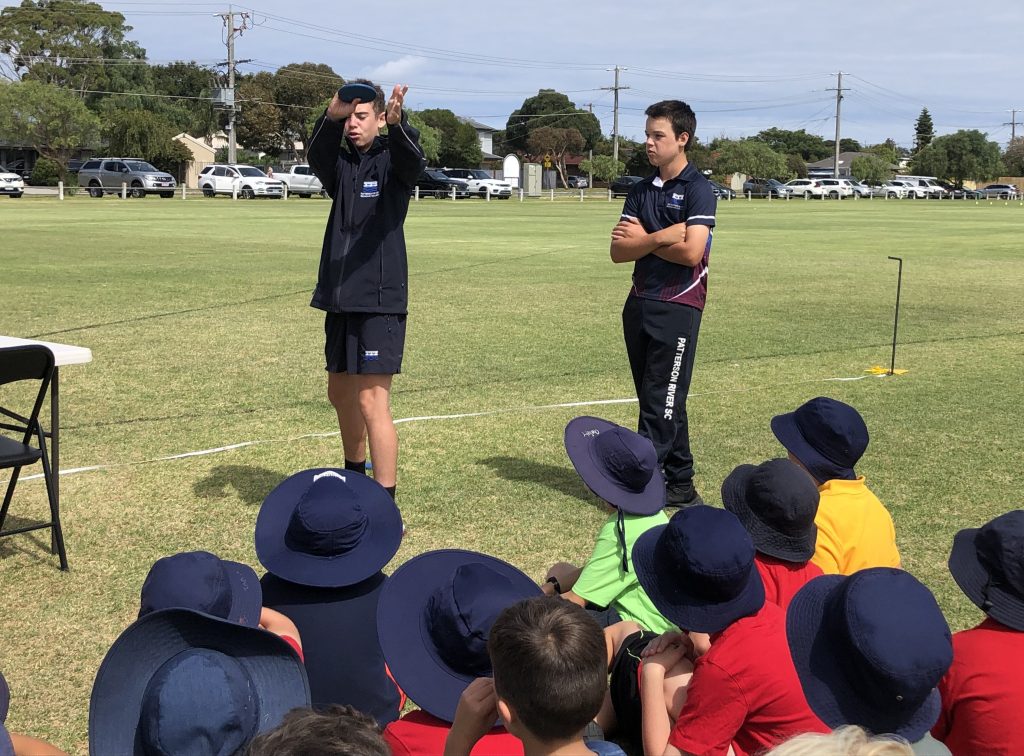
“I was covering the coaching content in my pre-existing program anyway” she explained. Because students were already participating in coaching activities, including leading Year 7 sessions, the transition was seamless.
“At the end of the year, all of [the students] expressed that earning a VET Certificate II in Sport Coaching along with a First Aid certificate was a valuable outcome, particularly given that the content aligned closely with what they would have undertaken regardless .”
Overcoming Challenges with Practical Thinking
For Allan, the biggest challenge was meeting the theory requirements of the VET course while maintaining the program’s hands-on approach.
“The theory’s the challenge, I guess,” she reflects. Her solution? Deliver theory through practice.
Instead of only reading about manual handling, students hit the sports field with equipment like gear bags. “We’re just always out utilising the coaching space to deliver that content,” she says.
This approach also reinforces correct language and processes, with students taking ownership and often holding their teacher accountable. “It’s quite humorous… they’ll say, ‘Miss, what are you doing?’ and I say, ‘Ah, very good.’ So, they pick up on it.”
Strong Engagement, Strong Results
Recent improvements in IVET’s course content have also supported student engagement. “This year’s Work Health & Safety content was really good — so much more relevant to Certificate II in Sport Coaching,” said Allan, highlighting the value of up-to-date, context-specific resources.
Since integrating VET into the program, she has seen a 99.5% completion rate — a testament to the alignment between practical learning and formal qualification.
Key Takeaways for Schools and VET Trainers
For schools and trainers looking to implement or strengthen their VET in Schools (VETDSS) programs in Sport Coaching or Sport & Recreation, Allan’s success offers valuable lessons:
- Start with what works: Integrate VET into existing successful programs or school events.
- Keep it practical: Reinforce course language and concepts through real-world activities.
- Be strategic with sessions: Strategically use group coaching to efficiently meet assessment requirements.
- Leverage updated resources: Use current, context-relevant materials to boost engagement.
A Program Students Want to Be Part Of
The demand for EXCEL Sport is undeniable. Each year, 90–100 students trial for just 24 Year 7 places.
As Allan summed it up: “The [Year 10s] get real agency from the coaching and really enjoy the challenges… the course is really good for them.”
IVET Institute partner school Birchip P-12, located in regional Victoria, recently gave students a taste of professional cooking thanks to a hands-on visit from one of Australia’s most beloved chefs.
Renowned for his passion for local produce and Italian tradition, Stefano Di Pieri spent two immersive days with first, and second-year VET Cookery students, bringing lessons far beyond the kitchen.
A Connection Years in the Making
Stefano’s relationship with Birchip began decades ago through his friendship with locals Eddie and Frances Lee and continued through his time as a board member of the Birchip Cropping Group (BCG). It was during a 50-year celebration dinner for BCG, where he welcomed help in the kitchen, that Kristy Knights (VET Cookery teacher at Birchip P-12) formed a connection that would eventually bring Stefano back to the region – to cook, to teach, and to inspire.
Lessons in Simplicity, Seasonality and Soul
The visit began with an engaging classroom session, where Stefano spoke about the value of building a well-stocked pantry and preparing meals that are both nutritious and affordable—lessons highly relevant to students preparing for life after school.
Then, a short walk to Birchip’s local IGA and Bourke’s Butcher turned into a mini-masterclass on shopping seasonally, choosing quality produce, and making food choices based on freshness and availability, a true paddock-to-plate perspective.
A Hands-On Feast in the Kitchen
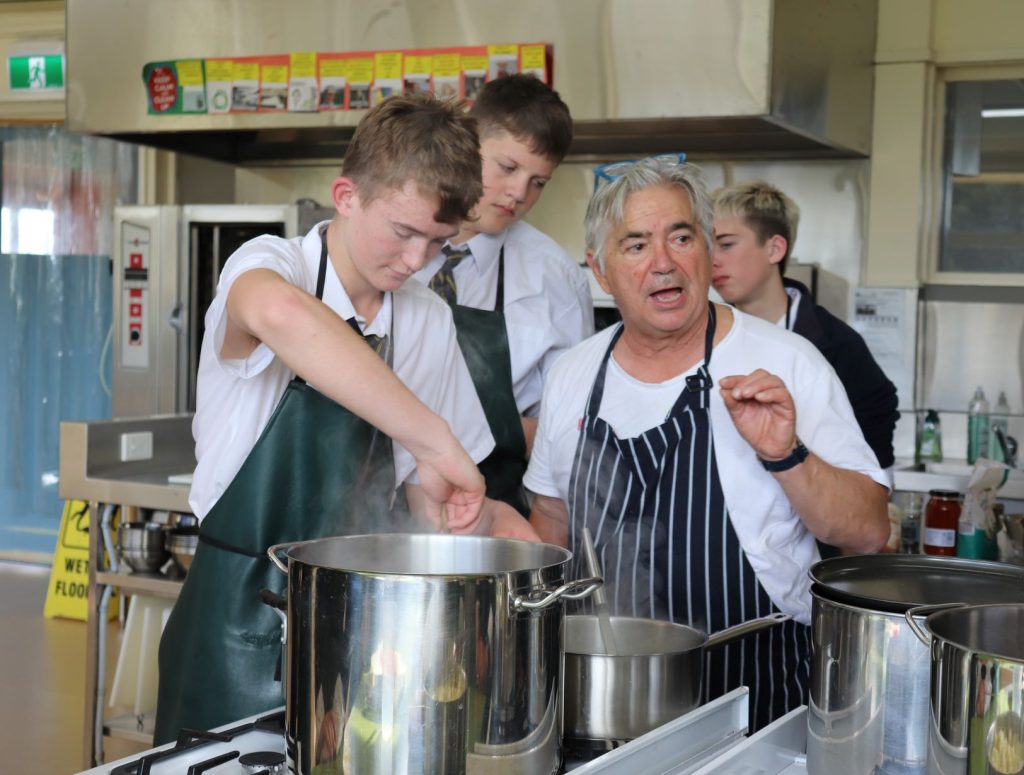
Back in the kitchen, the atmosphere was electric. Stefano’s calm, inclusive style allowed every student to get involved. Working side-by-side, they prepared an impressive array of dishes including:
- Traditional Bolognese
- Handmade gnocchi and pasta
- Mushroom risotto
- Lamb ragù
- Potato soup
- Focaccia and bread rolls
- Farfalle with broccoli
- Santiago cake

Students learned foundational techniques like how to make soffritto (a mix of onion, carrot and celery at the heart of many Italian dishes), and how to balance flavours and textures from scratch.
“The kitchen was full of laughter, hands-on learning, and shared meals,” Kristy said. “It was a masterclass not just in cookery, but in connection and community.”
A Lasting Impact
Stefano’s visit left more than full stomachs – it left a lasting impression. Students walked away with new skills, new confidence, and a deeper appreciation for the creativity and discipline behind great cooking.
“We’re incredibly grateful to Stefano for his generosity,” Kristy added. “His time, warmth, and willingness to teach meant the world to our students.”
IVET Institute is proud to support schools like Birchip P–12 in delivering real-world hospitality and cookery experiences that inspire students and build skills for life.
We hope this isn’t the last time the Birchip kitchen is graced by Stefano’s presence, and based on the smiles, it certainly won’t be.
How Victory Christian College is turning racing passion into vocational learning pathways
At Victory Christian College near Bendigo, VET Coordinator and Trainer Richard Murphy has redefined what vocational education can look like. By combining the adrenaline of human-powered vehicle racing with IVET’s Certificate II in Workplace Skills, Richard has created a hands-on program that connects classroom learning to real-world outcomes – and keeps students fully engaged.
Making Learning Relevant
Victory Christian College has been part of the Energy Breakthrough program for nearly a decade. After COVID prompted a reset, Richard expanded the Victory Racing Team (VRT) to include Year 9 and 10 students. The College asked for an academic component to strengthen the program, and Richard saw an opportunity.
By embedding the delivery of the Certificate II in Workplace Skills learning into racing activities, students could link their love of sport and engineering with vocational skills that prepare them for future study, apprenticeships, and employment.
Real-World Learning in Action
Each unit of competency is delivered through authentic racing contexts:
- Time Management (BSBPEF202): Students balance training schedules with studies, supported by guest speakers in corporate team-building.
- Health & Safety (BSBWHS211): Hazard assessments of race environments and safety protocols for trikes make risk management immediately relevant.
- Communication Skills (BSBCMM211): Students research local businesses and pitch real sponsorship proposals, gaining face-to-face industry experience.
- Financial Transactions (SITXFIN007): Fundraising through Krispy Kreme drives and hot dog stalls brings budgeting and profit margins to life.
- Digital Technology (BSBTEC202): Students create media packages, promotional videos, and parent evening presentations using modern workplace tools.
- Sustainability (BSBSUS211): Recycling schemes and reusing trike chassis highlight environmental and cost-saving benefits.
Building Industry Connections
The program thrives thanks to genuine partnerships. Local businesses don’t just donate; they mentor.
- Wattle Racing shared design insights and industry expertise.
- Former students offered advice on balancing study, sport, and career.
- McCulloch’s Hydraulic Engineers provided professional training in painting, machining, and maintenance while opening doors to potential work experience opportunities.
These collaborations ensure students experience industry expectations first-hand, while businesses see real value in supporting the program.
Real Outcomes, Real Impact
The impact is clear:
- Zero withdrawals from the program despite busy calendars.
- A student who once considered leaving school transitioned into a diesel mechanic apprenticeship, inspired by his role on the pit crew.
- Students developed leadership, teamwork, and problem-solving skills under real race pressure — from handling presentations before judges to repairing trikes mid-race.
By contextualising the learning, Richard has turned theory into practical skills that matter beyond the classroom.
Lessons for Schools
Victory Christian College’s success shows that:
- Curriculum becomes powerful when linked to student passions.
- Authentic leadership grows naturally through meaningful responsibility.
- Industry partnerships must provide mutual benefit to be sustainable.
As Richard expands the program into a two-year cycle, more students will benefit from this innovative blend of sport, enterprise, and vocational training.
The Future of VET Engagement
The Victory Racing Team is proof that VET in Schools doesn’t have to be separate from student interests, it can be fuelled by them. By making skills training fun, practical, and connected to the community, schools can unlock pathways that might otherwise remain hidden.
The IVET Institute congratulates the Victory Christian College Racing Team and looks forward to seeing their continued success at the Energy Breakthrough in Maryborough, November 2025.
Many schools and students are drawn to sport-focused VET programs—but when it comes to choosing between Certificate III in Sport, Aquatics & Recreation (SIS30122) and Certificate III in Fitness (SIS30321), the choice isn’t always clear.
Let’s break it down.
Course Structure & Delivery
The Sport, Aquatics & Recreation qualification offers:
- 6 core units and 9 electives, allowing flexibility across streams like coaching, aquatics, and outdoor recreation.
- Broader options for practical delivery and integration across school settings.
In contrast, the Fitness qualification includes:
- 11 core units and only 4 electives, mostly tied to gym and fitness-specific work.
- More stringent delivery requirements due to assessor qualifications.
For schools, Sport, Aquatics & Recreation is often easier to set up and deliver—especially where fitness facilities or qualified instructors are limited.
Trainer Requirements
Fitness assessors must:
- Hold a Cert III or IV in Fitness and have 2+ years’ industry experience, or
- Be a registered health/exercise professional.
Meanwhile, Sport, Aquatics & Recreation trainers only require specific experience if delivering aquatics electives—providing greater flexibility in school delivery.
Career Opportunities: Where Can It Take You?
Certificate III in Sport, Aquatics & Recreation can lead to:
- Recreation officer
- Swim teacher*
- Lifeguard*
- Community activities officer
- Leisure services officer
(*with relevant electives)
Certificate III in Fitness supports roles such as:
- Fitness instructor
- Group fitness trainer
- Aqua aerobics instructor
The difference? Sport, Aquatics & Recreation covers a wider range of community-facing roles, offering greater job diversity.
What the Job Market Says
According to Jobs & Skills Australia:
- Recreation Officers are projected to grow 9.3% by 2028.
- Swim Teachers and Lifeguards remain in high demand, particularly with ongoing shortages in aquatic centres nationwide.
- The Fitness Instructor field has grown, but opportunities can be more competitive and often require additional qualifications to gain employment in commercial gyms.
For students not quite ready to specialise in fitness but still want to work in sport or recreation, the Sport, Aquatics & Recreation program offers a more accessible pathway.
The Takeaway for Schools
If you’re looking for a versatile, engaging, and industry-relevant program that supports broad career outcomes and is easier to implement in a school setting, Certificate III in Sport, Aquatics & Recreation is the clear winner.